Why some pets are afraid of grooming
Grooming anxiety in dogs and cats usually comes from one of three places: a previous bad
experience at a groomer, lack of early exposure to grooming as a puppy or kitten, or a
naturally nervous temperament. Some dogs have had a groomer cut them with clippers, force
them into uncomfortable positions, or leave them in a loud kennel for hours surrounded by
barking dogs. That single bad experience can create a lasting fear response.
Cats are even more susceptible to grooming anxiety because they are territorial animals
that become deeply stressed in unfamiliar environments. A cat that has never been to a
grooming salon may react with scratching, biting, freezing, or trying to escape. Forcing
the appointment through teaches the cat that grooming is something to fear, which makes
every future visit harder.
Rescue animals add another layer of complexity. A dog or cat adopted from a shelter may
have no grooming history at all, or may have been neglected to the point where handling
of any kind triggers a stress response. Understanding the source of the anxiety is the
first step toward building a better grooming experience.
How Four Paws & Claws handles anxious pets
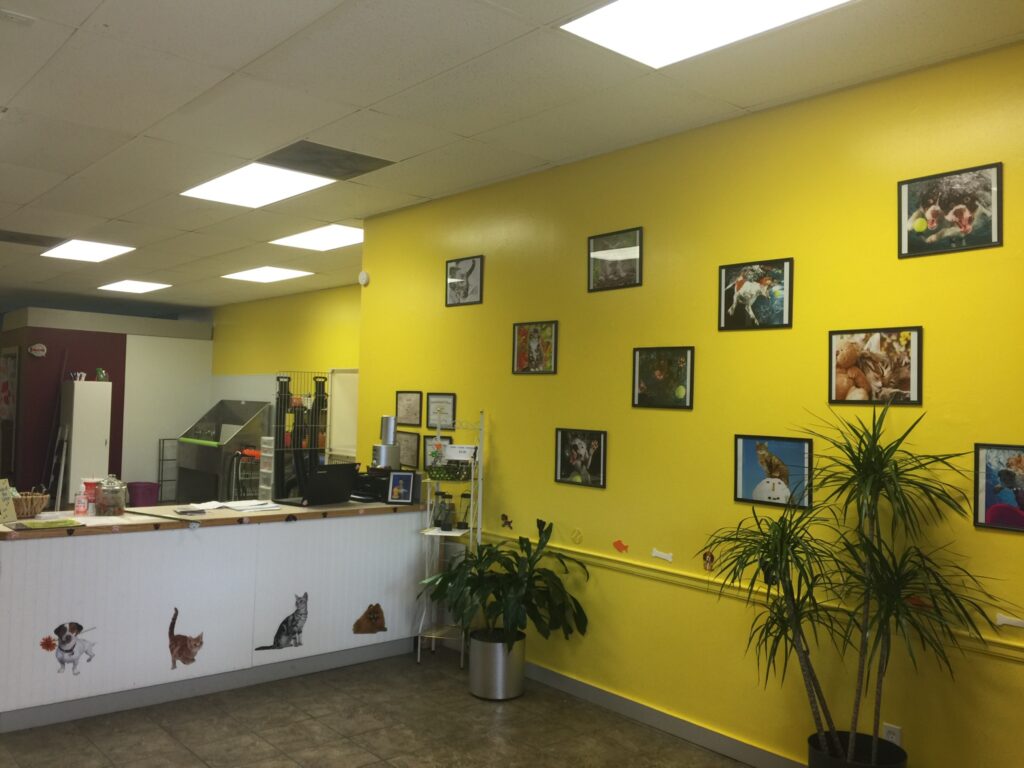
The single most important difference at Four Paws & Claws is that every pet is groomed
one at a time. There is no rotating door of animals being bathed, dried, and clipped
simultaneously. Your pet gets the groomer's undivided attention in a calm, controlled
environment. That alone eliminates the biggest stressor in most grooming salons: the
noise, chaos, and proximity of other animals.
For anxious dogs, the groomer uses a gradual introduction. Instead of immediately lifting
the dog onto a table and starting clippers, the visit begins with a few minutes of calm
handling on the ground. The groomer lets the dog explore the space, sniff the tools, and
settle before any grooming begins. If the dog responds well, the appointment proceeds at
a steady pace. If the dog shows signs of extreme stress -- shaking, panting, whale eyes,
trying to flee -- the groomer scales back to what the dog can tolerate and ends the session
before it becomes traumatic.
For anxious cats, the same principles apply but with feline-specific adjustments. Quieter
tools, slower movements, no forced restraint, and breaks between steps. Cats that freeze
or shut down are given space to recover before the groomer continues. The goal is progress
over multiple visits, not a perfect result on the first try.
Building trust over multiple visits
For severely anxious pets, the first appointment is not really about grooming at all. It
is about creating a positive association with the salon environment. The groomer might do
nothing more than give the pet treats, do a brief brush, and trim a few nails. That short,
non-threatening visit becomes the foundation for the next one.
Over 2 to 3 visits, most anxious dogs and cats show measurable improvement. They enter
the salon more calmly, tolerate handling for longer periods, and begin to trust the groomer's
touch. By the fourth or fifth visit, many pets that were previously ungroomable are relaxed
enough for a full appointment. This gradual approach takes patience, but it produces lasting
results that benefit the pet for years.
If you are booking an anxious pet for the first time, call ahead and describe the animal's
behavior and history. The more context the groomer has, the better they can plan the visit.
Mention any known triggers (clippers, dryers, water, being lifted), previous grooming
experiences (good or bad), and any calming techniques that work at home.
What to do between grooming appointments
Desensitization at home makes a real difference in how your pet handles salon visits.
For dogs, start by handling their paws, ears, and face daily for short periods with treats
as positive reinforcement. Run an electric toothbrush or hair trimmer near them (not on them)
so they get used to the vibration and sound. Practice lifting them onto elevated surfaces
and rewarding calm behavior. These small exercises reduce the novelty of the grooming
experience.
For cats, focus on gentle brushing sessions at home, starting with just a few strokes and
gradually increasing duration. Handle their paws regularly to make nail trims less stressful.
If your cat has never been bathed, wipe them down with a damp cloth occasionally to get them
used to water on their fur. Consistency matters more than duration -- a 2-minute positive
session every day is better than one 20-minute session that ends in a scratch.
Book an anxious pet grooming appointment
If your pet has been turned away from other groomers, or if past grooming experiences have
been stressful for both of you, Four Paws & Claws can help. The salon works with anxious
dogs, anxious cats, first-time adult animals, rescue pets, and senior animals that have
developed grooming sensitivity. Every appointment is adjusted for the individual animal.
The salon is located at 4352 Pearl Rd in Old Brooklyn, Cleveland, and serves pet owners from
Parma, Brooklyn, Tremont, Lakewood, Brooklyn Heights, West Park, and surrounding neighborhoods.
Call (216) 744-0965 to discuss your pet's needs and schedule a visit. Mention any anxiety
triggers and the groomer will plan accordingly.